Understanding Variance in C#: Covariance, Contravariance, and Invariance

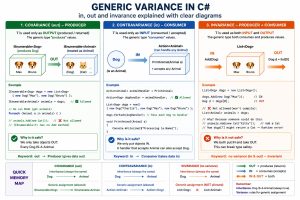
C# generics provide type safety and code reusability, but sometimes strict type checking can make our code less flexible. To solve this problem, C# introduces variance, which defines how generic types relate to each other. […]

Share Button

Saga Design Pattern in Microservices

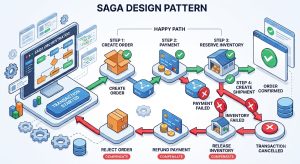
Introduction As applications evolve from monolithic architectures to microservices, one of the biggest challenges developers face is maintaining data consistency across multiple services. In a monolithic application, a single database transaction ensures that all operations […]

Share Button

Idempotency, Outbox Pattern, Inbox Pattern in Microservices

Building microservices is relatively straightforward. Building reliable microservices is where the real challenge begins. Modern microservices rarely work in isolation. A single business operation often involves multiple services communicating through message brokers such as Kafka, […]

Share Button

Dotnet Assemblies

Understanding .NET Assemblies: Manifest, Metadata, Strong Names & How .NET Solved DLL Hell Every .NET application you build—whether it’s a Console App, ASP.NET Core Web API, Windows Service, or Class Library—is ultimately compiled into an […]

Share Button

Dispose Pattern

Resource management is one of the most important concepts in .NET development. While the .NET Garbage Collector (GC) automatically manages memory, it does not immediately release unmanaged resources such as file handles, database connections, network […]

Share Button